
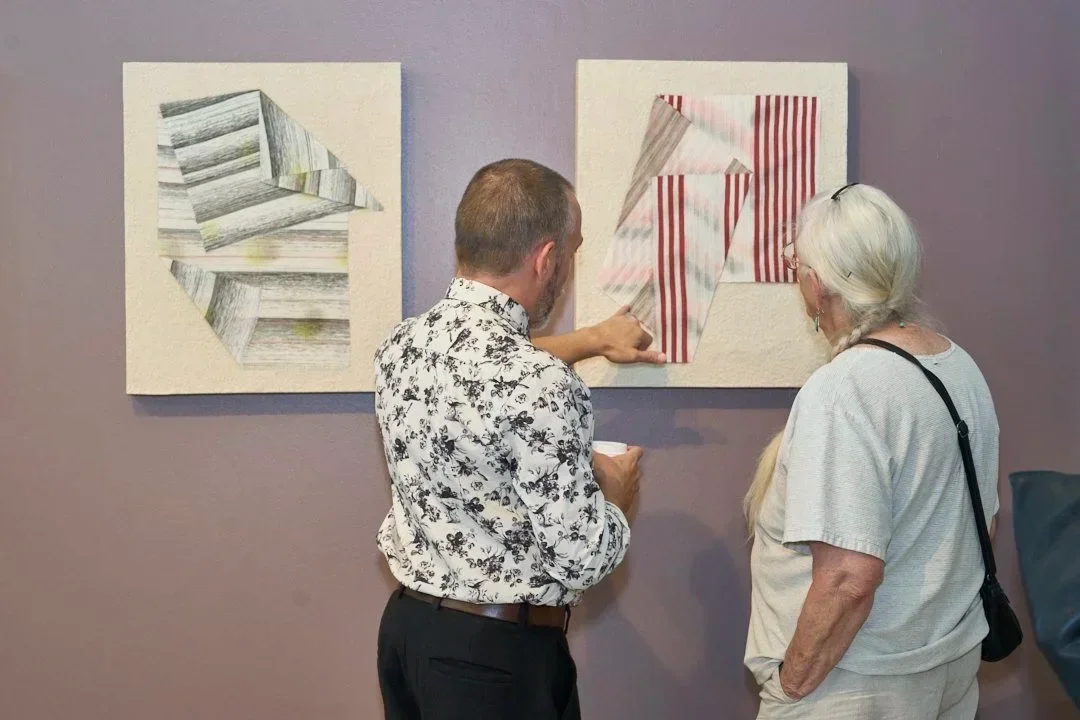
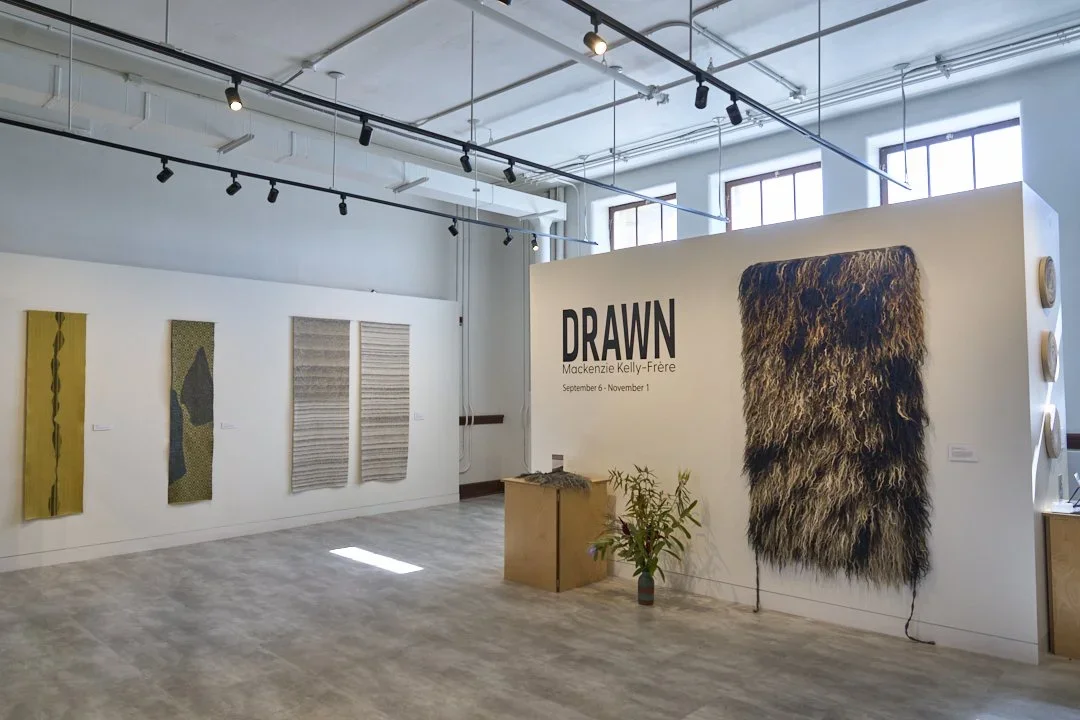
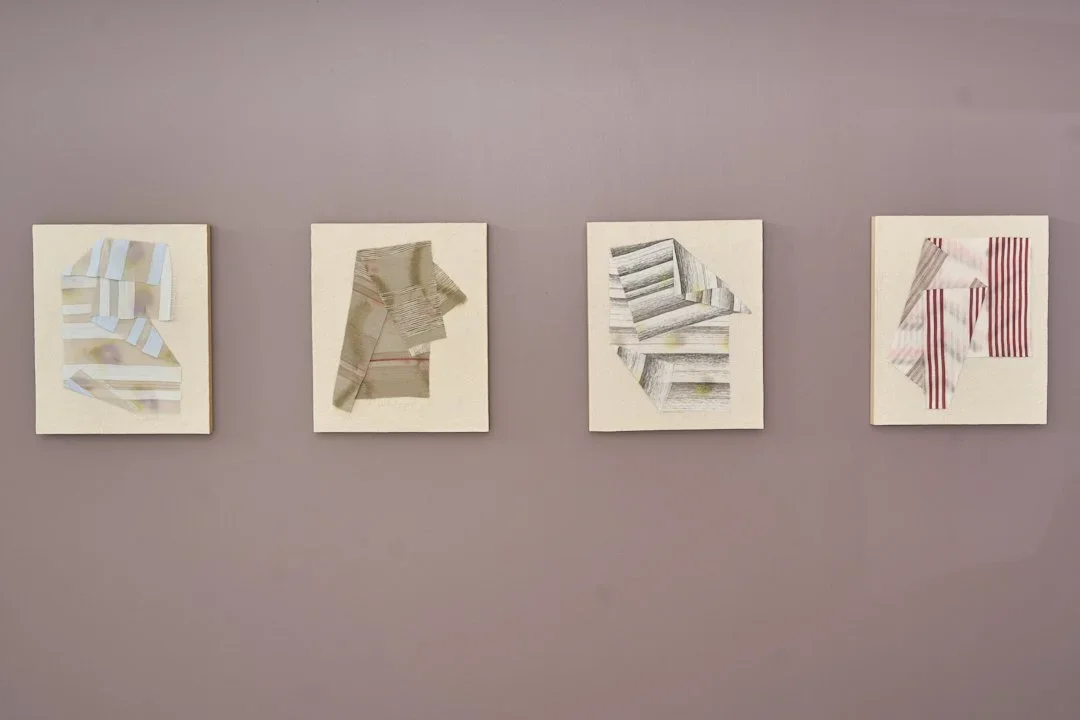
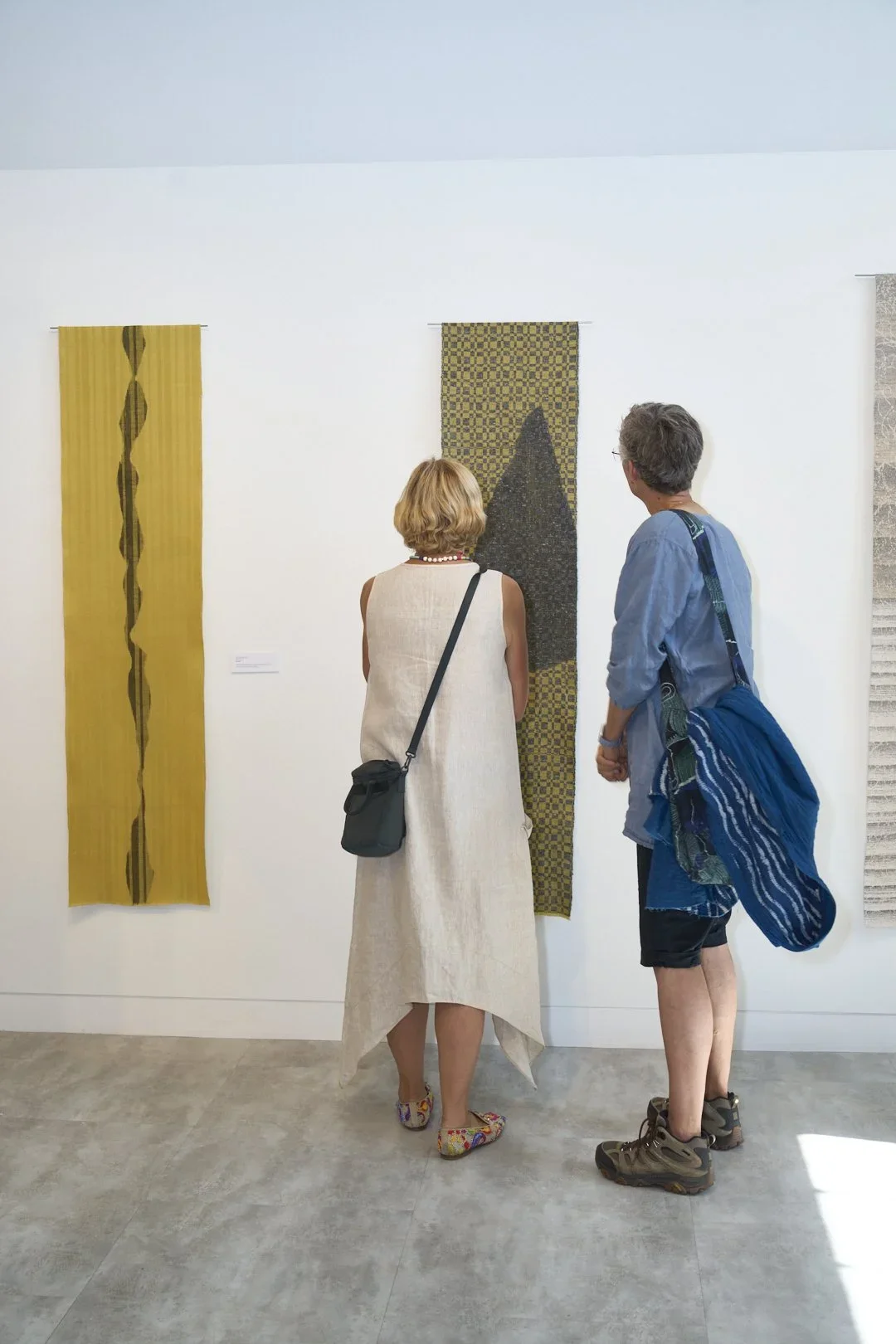
In September, the second iteration of Drawn opened at the Alberta Craft Council Gallery in Calgary (Mohkinstsis). This exhibition was especially meaningful for me as it was in my hometown. Friends, family, colleagues, mentors and students came to see the show. It was immensely gratifying to chat with as many of you as I could. Thanks to everyone who came to see the show and hear my artist talk.
Some will have noticed I neglected to write a post for The Fell in November. All I can tell you is that I am easily distracted by weaving equipment. Throughout November I was busy assembling, disassembling, painting and re-assembling my drawloom attachment. In December and January, I painted and rigged steel counterweights and designed and built a custom extension for the back of my loom. In short, I’ve been thoroughly focused in the studio on a project I’ve looked forward to for years. I have a lot to share about how it has all come together.
I am so glad you are here.
Loom inside a loom
Two boxes of timber and hardware arrived from Glimakra in November. Before this there was much thinking, research and planning. Do I need just a single unit? Should I add a shaft drawloom attachment as well? Will I need an extension? Should I build my own? I’ve had my Glimakra Standard loom for more than twenty years so it was a bit daunting to consider drilling holes in its elegant fir timbers. Here I was lucky to have the advice of some truly generous drawloom specialists. Thank you Amy Blair and Justin Squizerro for answering many questions and offering your counsel over the past year and a half as I pondered my options for setting up a drawloom to weave my own figured damask cloth - analog style. (Amy’s drawloom videos on Youtube have also been incredibly helpful as I tackled assembling and warping my own drawloom. If you are at all curious about this sort of weaving her channel is a great place to start.) Once I had worried for what seemed an adequate amount, I ordered a single-unit drawloom with a countermarche conversion to allow for five-point structures. One can also weave with a drawloom using a counterbalance set-up which I plan to try sometime in the future.
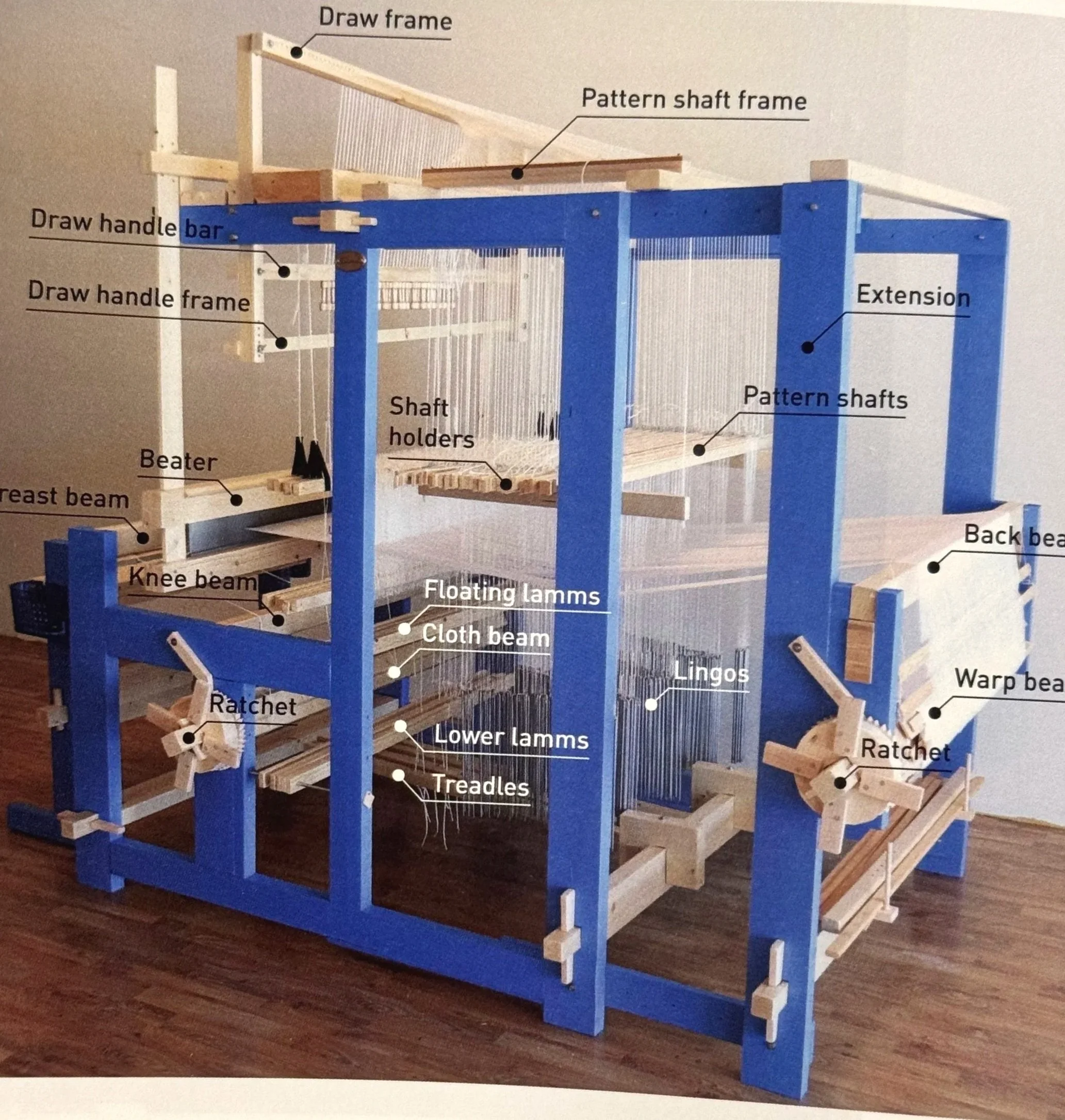
Look at this lovely BLUE loom! The typical draw frame and full height loom extension are also shown in this image.
Inspired by a drawloom Ann Nygard’s book Damask Weaving, I resolved to paint my single-unit drawloom attachment blue. Now if you ever get it into your own noggin to paint all the bits and bobs on your own loom take heed - every stick has four sides and two ends - all of which will want at least two coats. The entire process was just arduous enough that I decided to leave the new countermarche atttachment in its natural shade. One day I promise to at least oil these pieces, but for now at least there is weaving to do.
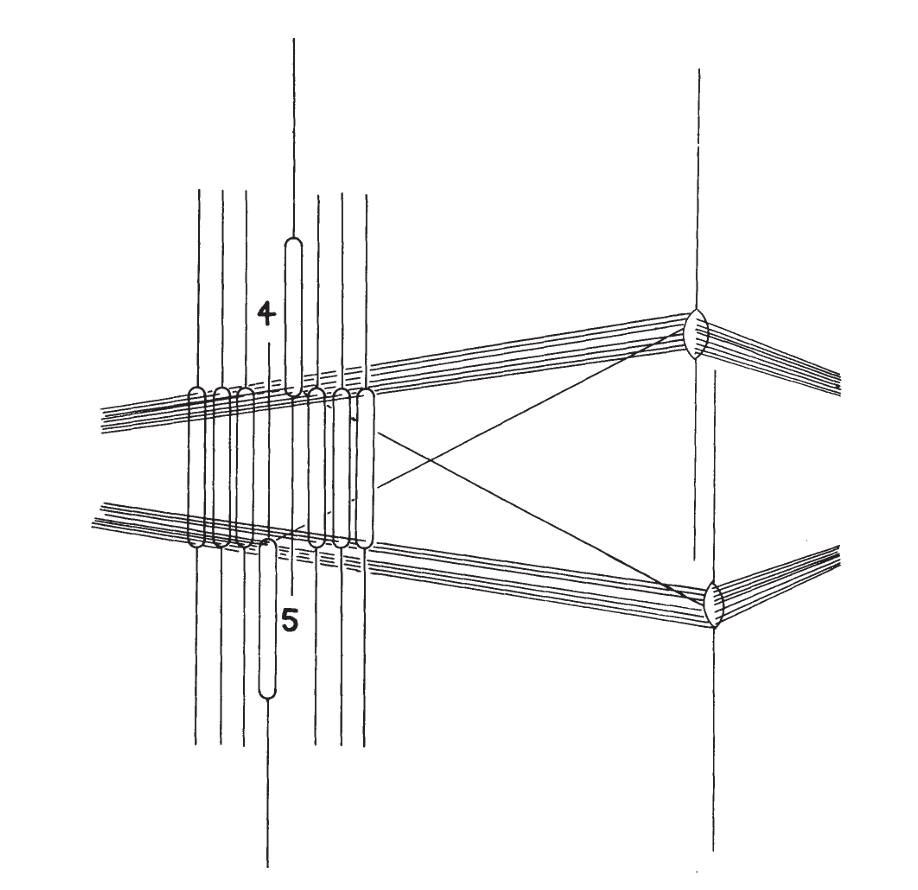
Diagram from Ruth Arnold’s “Weaving on a Drawloom” 1956 illustrating the drawloom weaving shed. Ground shafts are at the left and pattern units are at the right.
A drawloom attachment along with all its cords, bolts and pegs is essentially a loom inside a loom. It creates a second system of thread control or ‘harness” to accompany a loom’s primary harness - the set of shafts that create the base cloth structure. The drawloom harness sits behind the structural or “ground” shafts holding groups of four to eight threads in units. These units are lifted by the weaver using drawcords to create imagery or repeating pattern. Once the units are raised, all of the ground shafts are treadled in sequence to create one horizontal row of the pattern. Each treadle will pull an individual thread downward within each raised block and lift an individual thread from those units not raised. This all sounds a bit more tedious than it actually is - especially for the weaver invested in complex structures. I’m only about three meters in to my first warp and I am not bored yet.
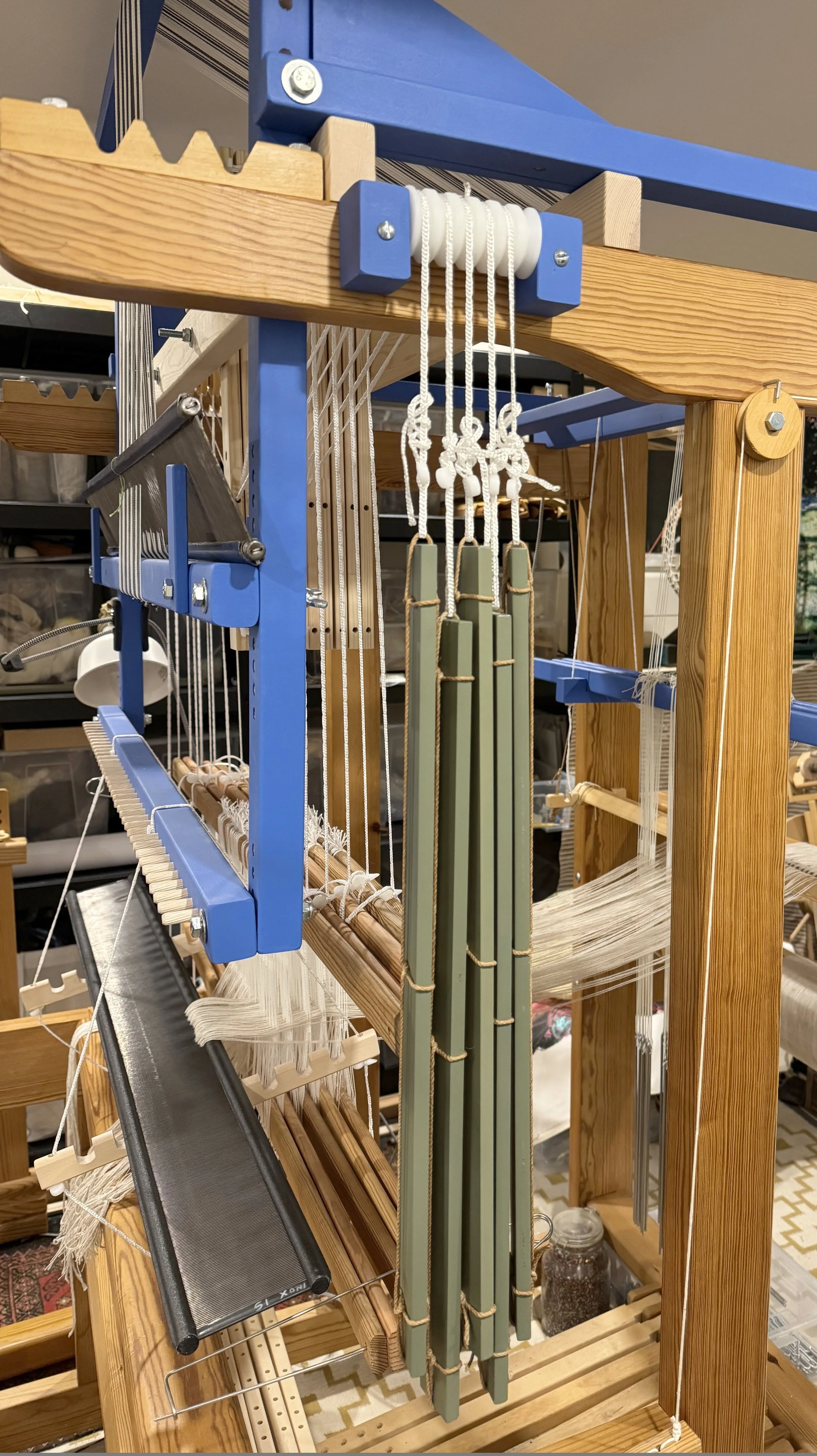
Painted steel counterweights rigged for fiveground shafts. At the bottom left you can also see the warp being sleyed in the reed. Throughout the set-up I alternated between mechanical problem solving wiht the weights and loom extension and the more familiar task of mounting the warp on the loom.
To return the ground shafts to neutral on a vertical countermarche loom, counterweights or a set of elastics are required. My drawloom mentor (Thanks again Amy) highly recommended counterweights in one of her instructive videos and I was inspired to make my own weights. After a few false starts with washers hung on cords - a nifty idea that was doomed from the start by the sheer volume of washers required - I decided to try steel bar (3/8 x 1 1/2 inches) cut to 20 inch lengths, weighing a little over 3 pounds or 1.5 kilograms each. I then painted them hospital green and rigged them up with old loom cords on rollers adjacent to the vertical jacks of my countermarche set-up. As it turns out, the weights are working perfectly on my first narrow test warp. I don’t think that a wider warp will effect the system all that much as the weight only needs to be adequate to bring everything back to neutral.
As you can see in the shed diagram from Ruth Arnold’s book, the drawloom weaver is asking a great deal from the threads as they traverse from the back of the loom through one harness and then another. Warp threads may change direction two or three times along their way to the front of the loom. Without an adequate distance the additional strain is likely to cause tension issues or even broken threads. The solution? Extend the back of the loom to give the threads more length to absorb the additional strain of multiple direction changes. I could have ordered an extension from Glimakra, but thought it might be fun to try and build this simpler bit of the loom myself. Add to this a genetic inheritance of almost pathological thrift (Thank you Grandma Tessa) and I soon found myself referring back to Nygard’s book for examples of do-it-yourself loom extensions.
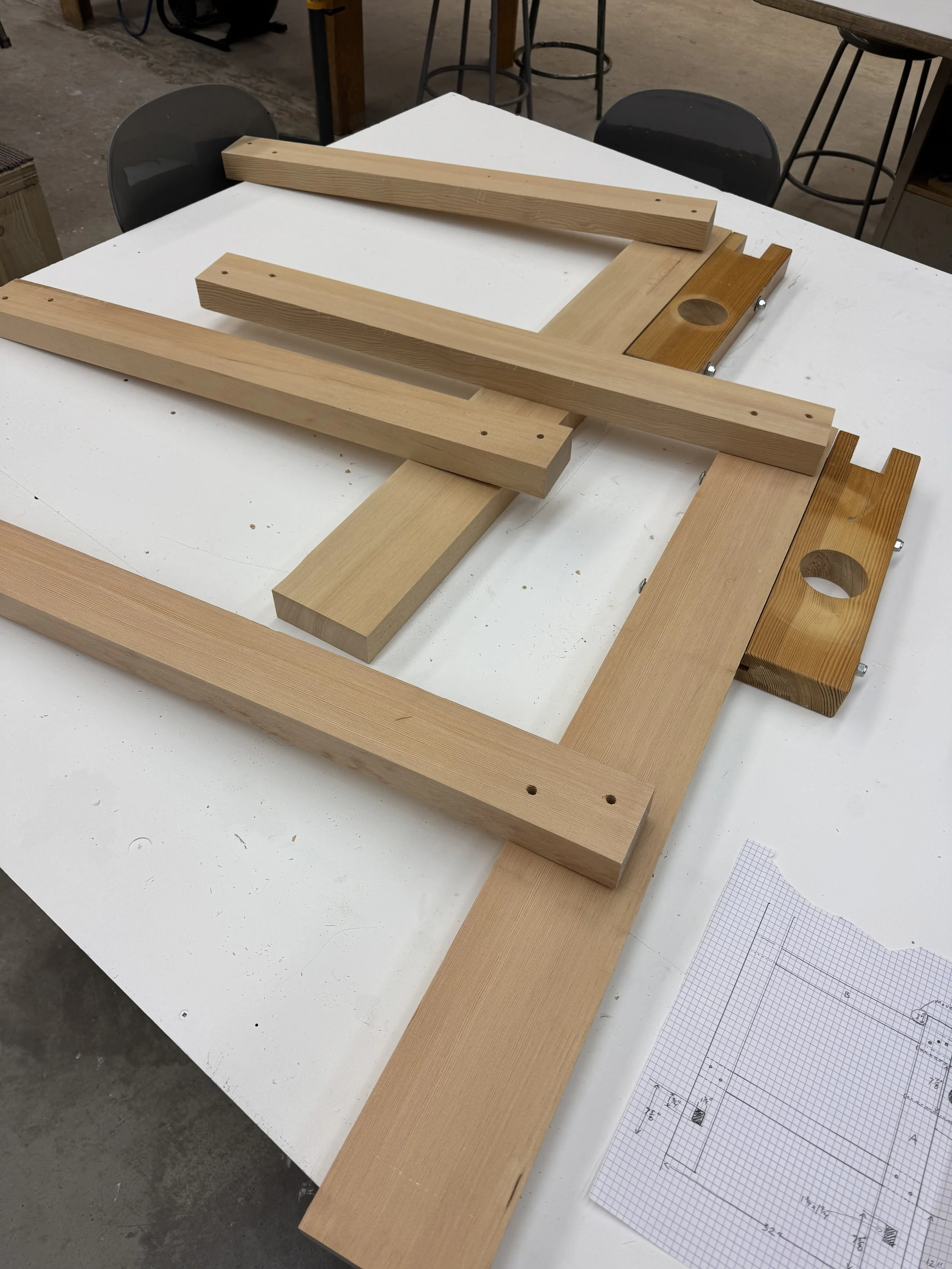
Loom extension in progress. The trickiest part of the build was drilling long holes across the two uprights to hold the warp beam supports in place.
I designed a simple and sturdy extension that required custom milling of the wood to suit the proportions of the thick timbers of my Glimakra Standard. I am a reluctant woodworker, but managed to cobble together the extension with patient guidance from our University’s woodshop technician - thank you Dara Humniski for all your help.
My quite possibly overbuilt loom extension adds 80 cm to the length of my loom - a distance recommended for weaving inelastic linen. For the one or two future drawloom weavers reading this, the height of the back beam is set to roughly eight centimetres higher than the front beam per advice from Joanne Hall’s book “Drawloom Weaving”. So far this height is working pretty well.
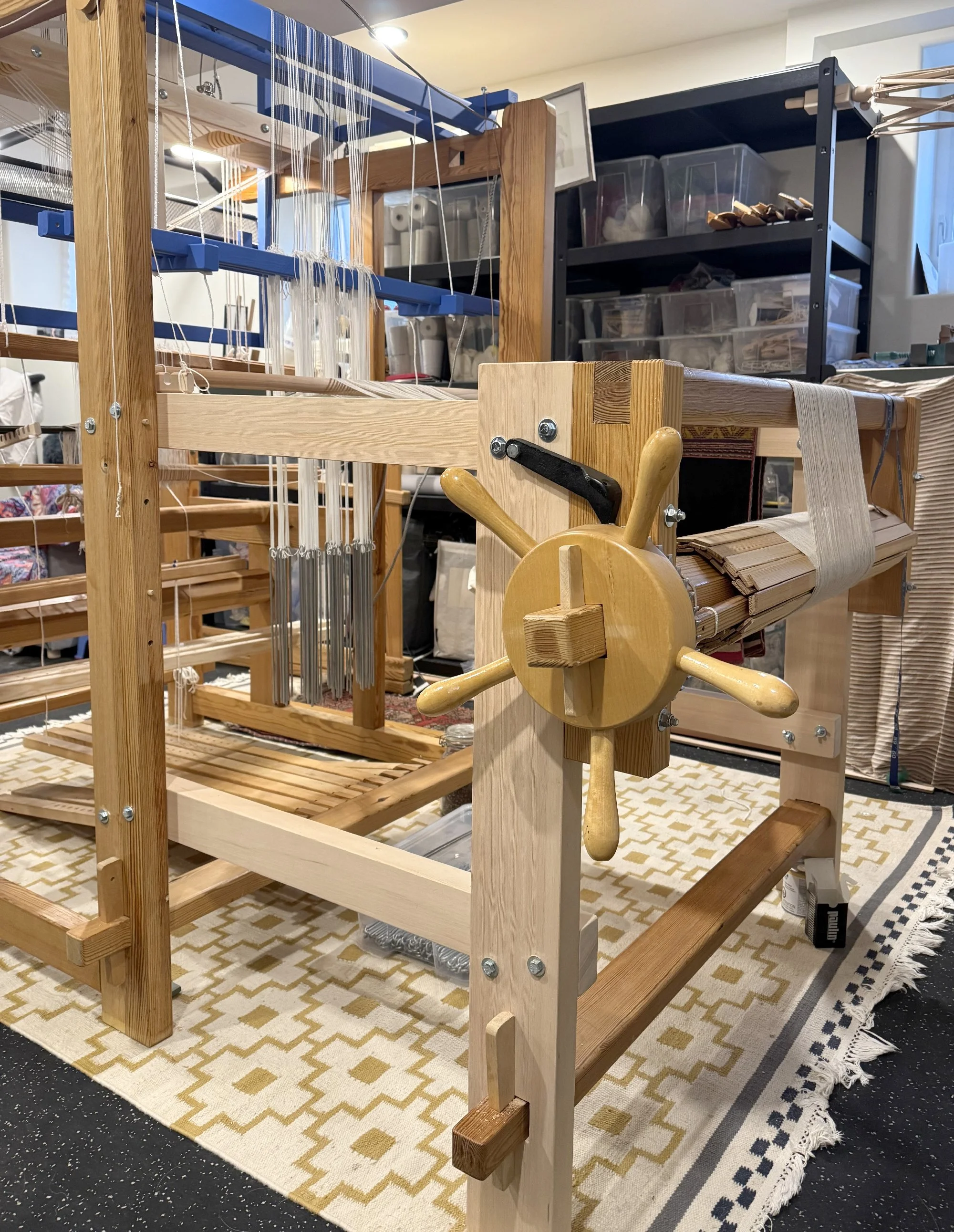
Behold! A loom extension that - like my countermarche conversion - could also use some oil…but weaving cannot wait!
The overall mechanics of the drawloom are fascinating and I will probably write more about this along with the process of warping the loom in future posts. I am already nearing the end of my first warp and am excited start preparing the next one. Warping the loom (twice as it happens on a drawloom) is nearly as enjoyable as the weaving itself. So what am I weaving?
Weaving plants
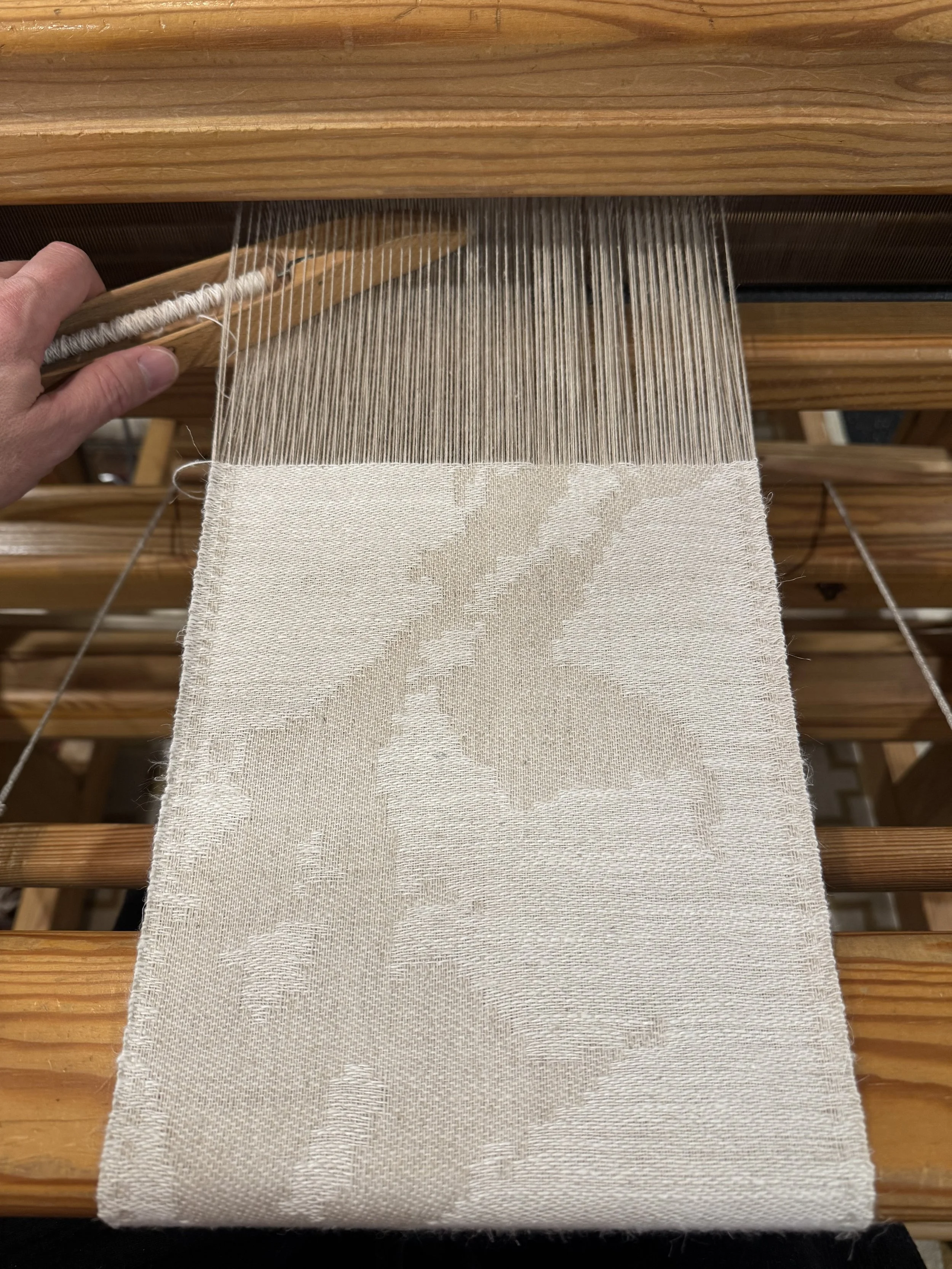
Solidago altissima (Canadian goldenrod) image drawn from photograph of a plant in my garden.
I am weaving plants. For centuries damask cloth has featured plants, animals and sometimes people. When I began to think about the sort of motifs I wanted to weave it was clear I wanted to start with figuration that made sense to damask and its history. One of the other reasons I am starting with plants is because these curving leaf and stem shapes give me a chance to work out things like scale, composition and complexity. Over the years I’ve done a lot with Jacquard weaving where image generation is mediated through software. Something about incorporating analog drawing from life directly on graph paper really appeals to me. Of course plants also offer a great deal of conceptual richness to my work as both material (flax, milkweed, hemp fibre etc) and as a more-than-human collaborator. This new weaving focuses on situated materialities and disppearing ecologies and the ways in which we live with and against the natural world.
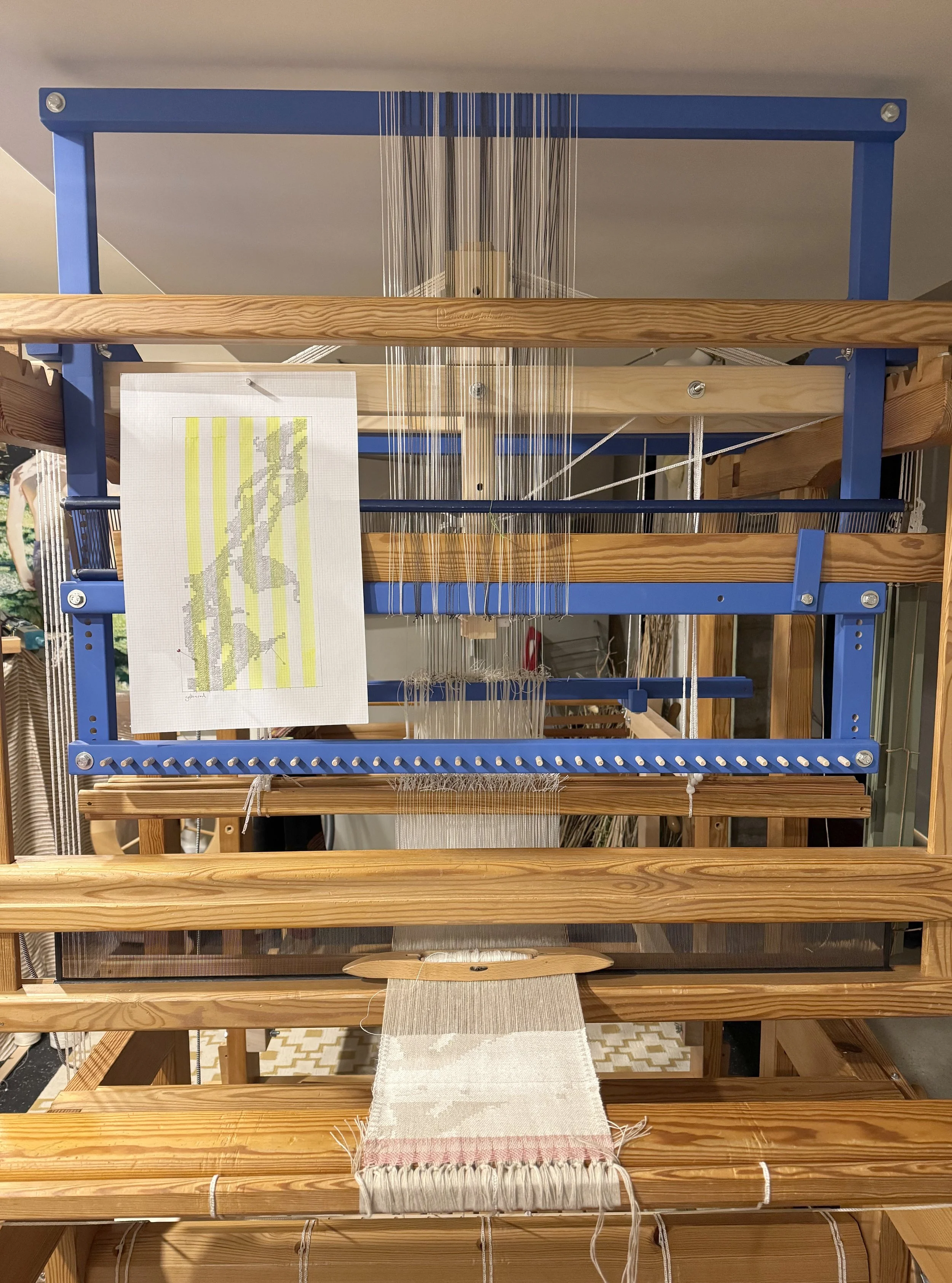
View from the front of the loom showing the first few inches of weaving with different wefts to achieve a true rendering of the cartoon (top right) derived from a stem of Goldenrod in my garden in December.
One of the first puzzles to solve when I began weaving was a weft choice. Too thin and the resulting image would be too short, too thick and the image would be too tall. My first warp is a 2/8 cotolin set at 30 threads to the inch in a five-point satin structure. After a few tests with finer line linen threads, I finally settled on a thicker tow linen single that did the trick - square squares! I think that scale is going to be the steepest learning curve on the drawloom as I attempt to render my subject in linen and silk. Below you can see the an enlarged image of the specimen stamp from the University of Calgary (U of C) Herbarium. Here a single pixel in my diagram is rendered at roughly 4 mm. The simplification and ultimate abstraction of the photographic image is really interesting to me and may factor in as I puzzle over this new way of working with the woven image. For these sketches, I have planned for three using analog-derived images (goldenrod, cushion spurge and peony from my garden) and three digital images derived from botanical specimens (American vetch and two types of rough fescue).
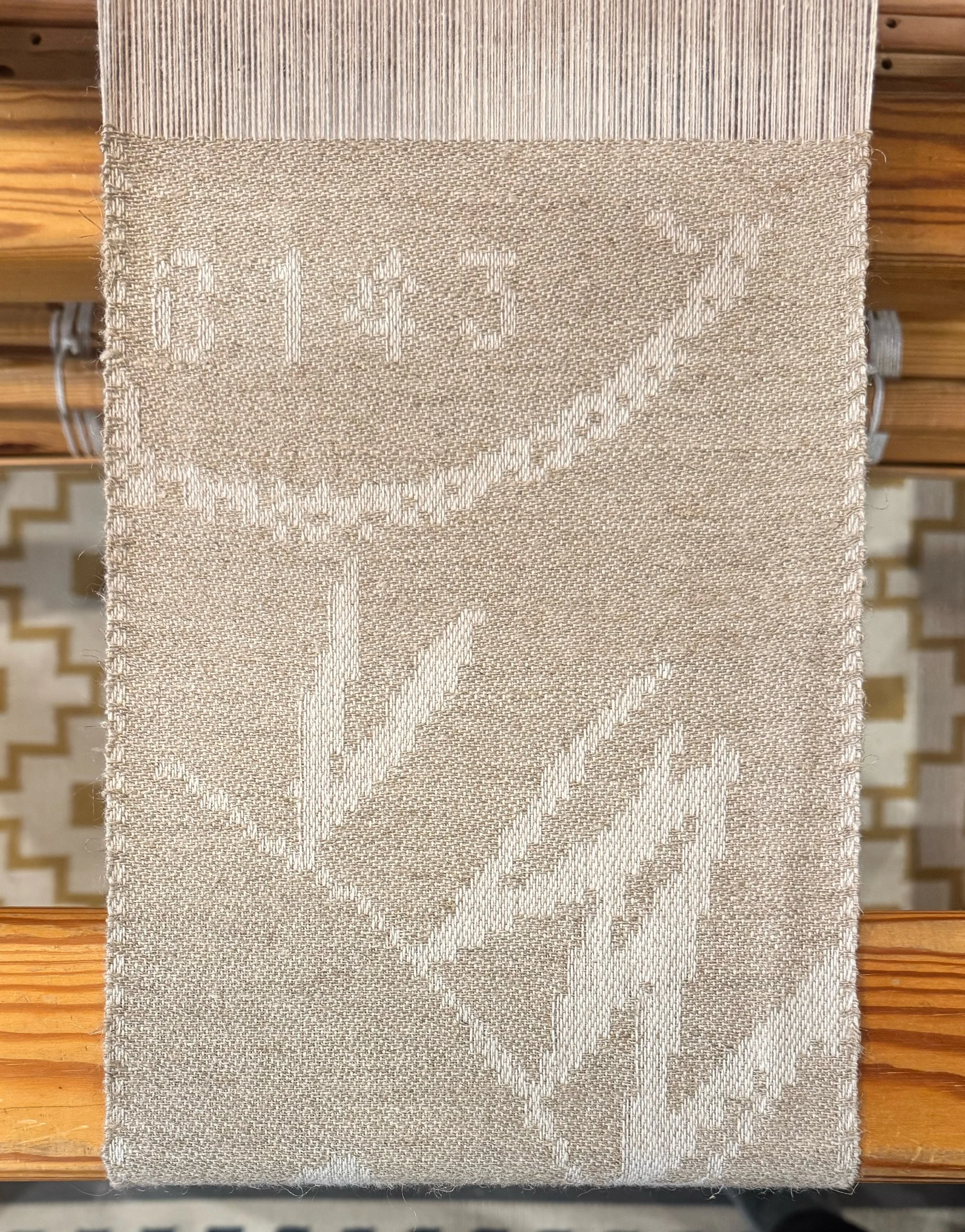
Vicia Americanis (American Vetch) image derived from a digital image of the botanical specimen kept at the Herbarium at the University of Calgary.
All of this sampling is part of a larger research project weaving some very specific plants. “Damask Herbarium: Banff” is the working title for this project where I plan to work with a set of botanical specimens collected by botanist John Macoun before the opening of Banff National Park in 1885. Later this summer I will be at the Banff Centre for Arts & Creativity where I hope to track down and draw the ancestors of the plants collected by Macoun. (For six weeks I am excited to be co-leading faculty for the six week Banff International Artist in Residence program with my colleague Germaine Koh. )
European damask is a luxury textile with centuries of history as a signifier of wealth and privilege. This project interrogates the nature of the imagery depicted in these textiles and its relationship to colonial histories and signifiers. Many if not all plants and animals depicted in this cloth offered an Orientalist vision of far-off places – often the same colonized places generating the wealth that enabled the production of luxury goods like Damask cloth.
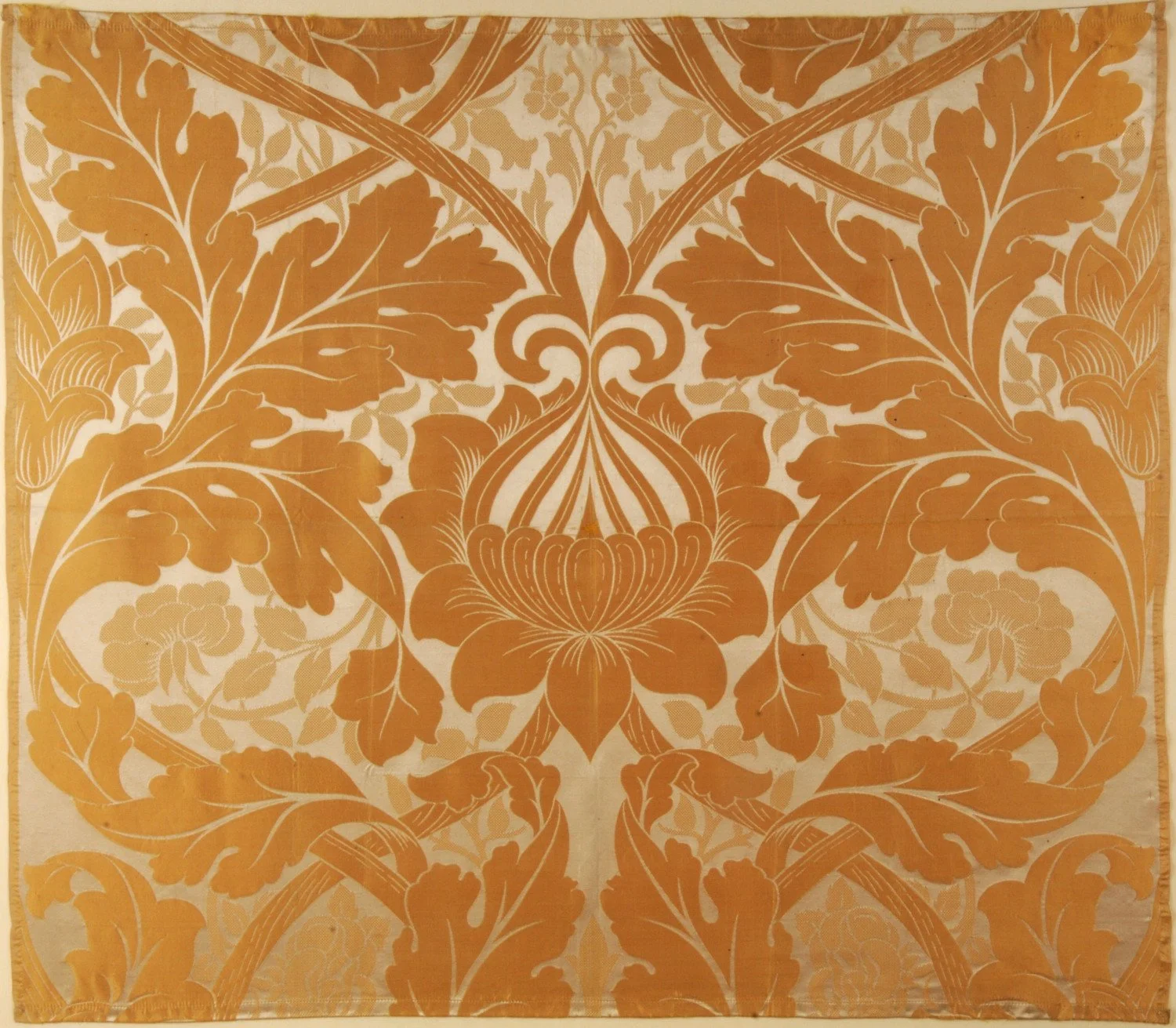
Silk Damask designed by John Henry Dearle (1859 - 1932) for Morris and Co ca 19142-1914. Note the lotus flower in the centre of the cloth.
The choice of the Macoun Banff National Park samples is intentional as the botanist’s legacy is linked to the westward expansion of Canada in the nineteenth century and the subsequent devastation of native prairie grasslands. His collection pre-dates the opening of the park and was displayed for its opening. Histories of plant collection and its relationship to conquest and the displacement of indigenous peoples are a key focus of this research.
Working on my drawloom, I intend to produce a damask cloth enmeshed with images of 140 year-old botanical specimens and their ancestors. “Damask Herbarium: Banff” examines how the visual language of damask design may be re-deployed to weave a (re)collection of plant specimens or woven herbarium, that speaks to the histories of Treaty Seven territory where the stewardship of irreplaceable ecologies is urgent.
Mobile Milkweed Herbarium
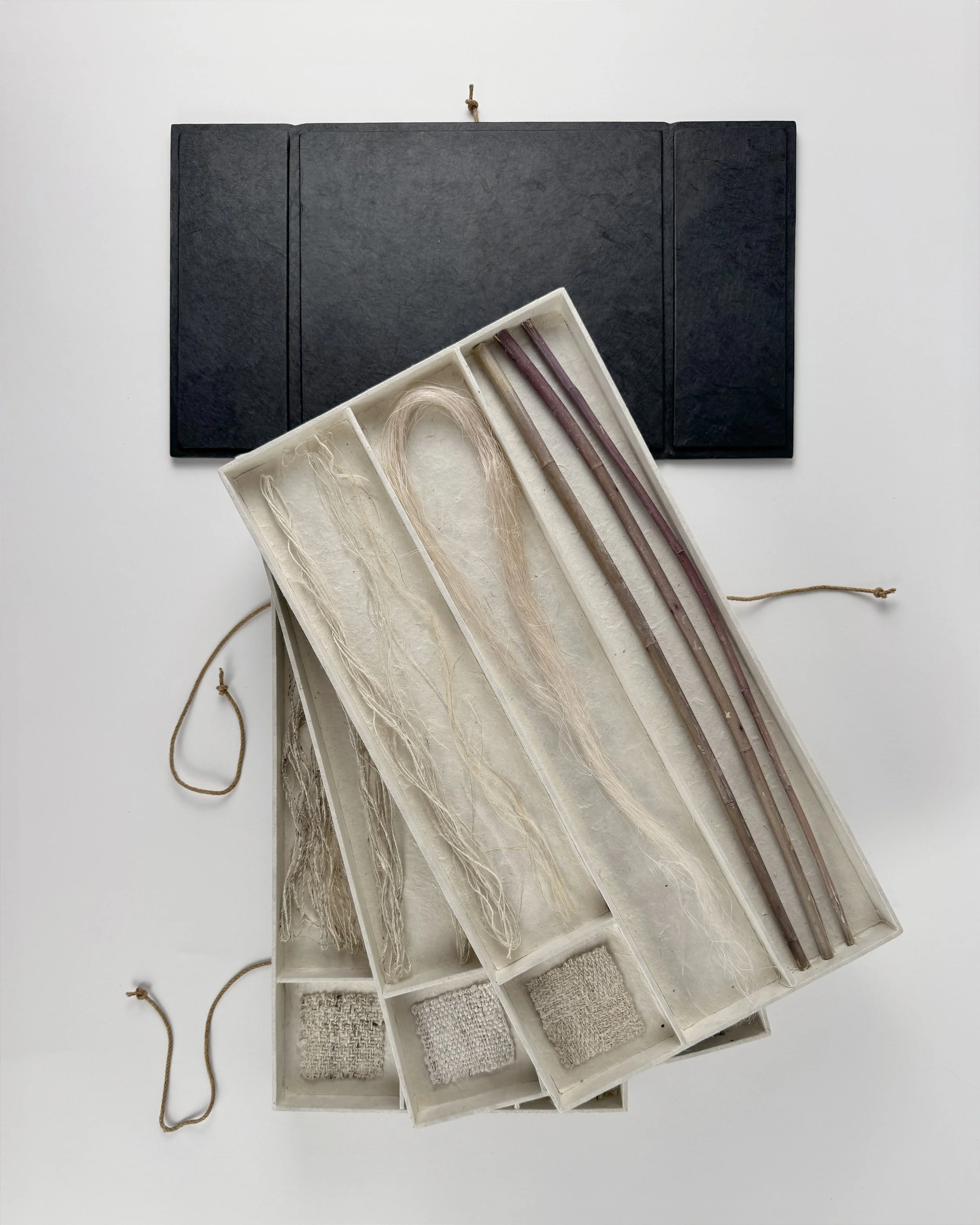
Mobile Milkweed Herbariun, paper covered, stackable trays with plant stalks, fibre, threads and woven samples, 2026
This month I am showing this work at Slow Fashion Lab, in the AHVA Gallery at the University of British Columbia. The exhibition has been curated by Gemaine Koh and Helene Day Fraser. The opportunity to participate in the exhibition and related symposium March 14 arose from my involvement with the Slow Fashion, Sustainable Fibre Research Cluster at the University of British Columbia. I look forward to sharing more about my work with the research cluster in a future post.
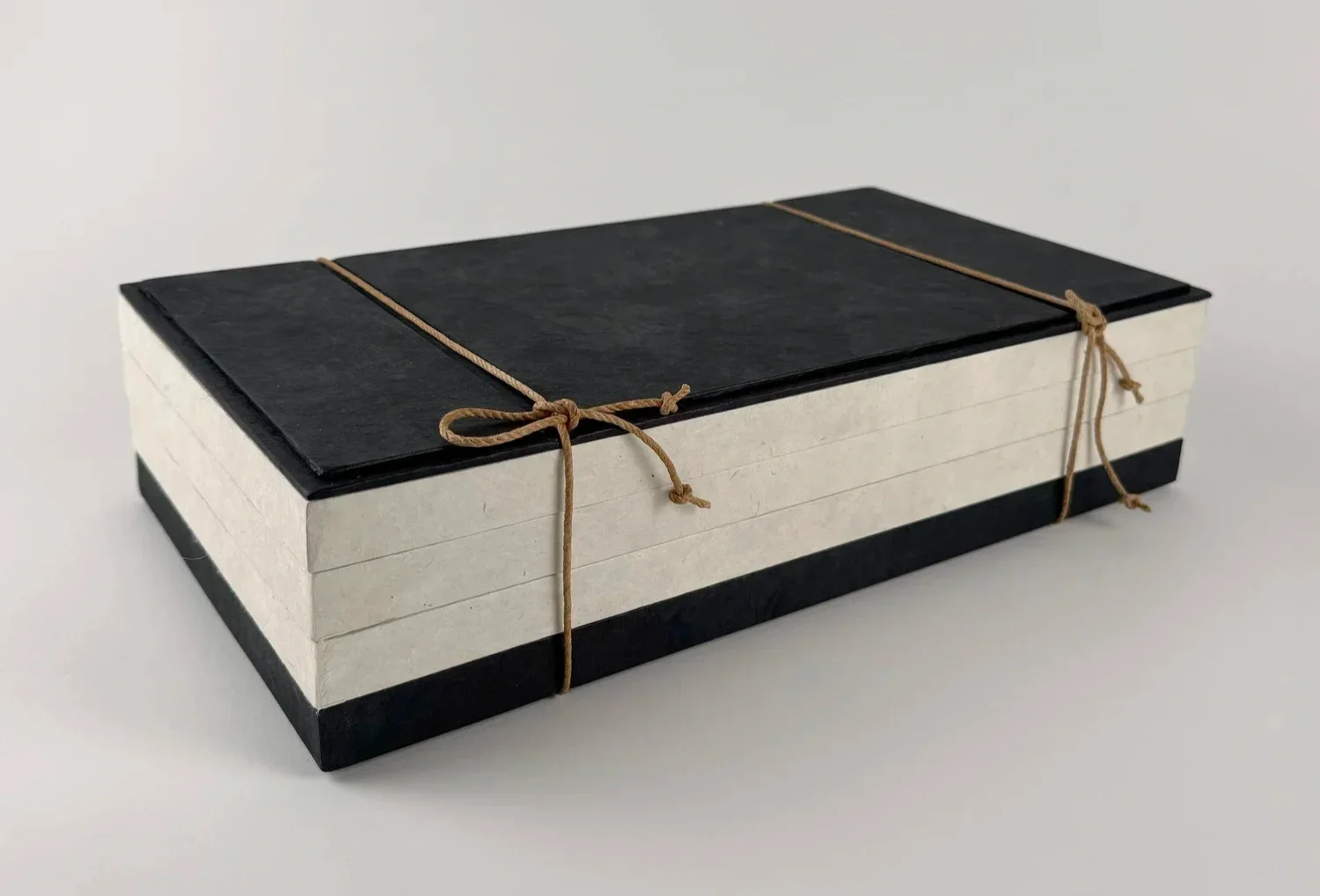
“The Mobile Milkweed Herbarium” contains plant stalks, fibre, thread and cloth drawn from three species of milkweed common to western Canada: Swamp milkweed (Asclepias incarnata), Showy milkweed (Asclepias speciosa) and Common milkweed (Asclepias syriaca). All plants were collected in Mohkinstsis (Calgary), Alberta. This sample collection of part of a larger research project aimed at producing thread suitable for weaving milkweed damask cloth. It is likely that this cloth will also feature imagery related to the milkweed plant…but for now I am still spinning.
Thank you for reading! Questions and comments are most welcome.